Natpat

Context and starting point

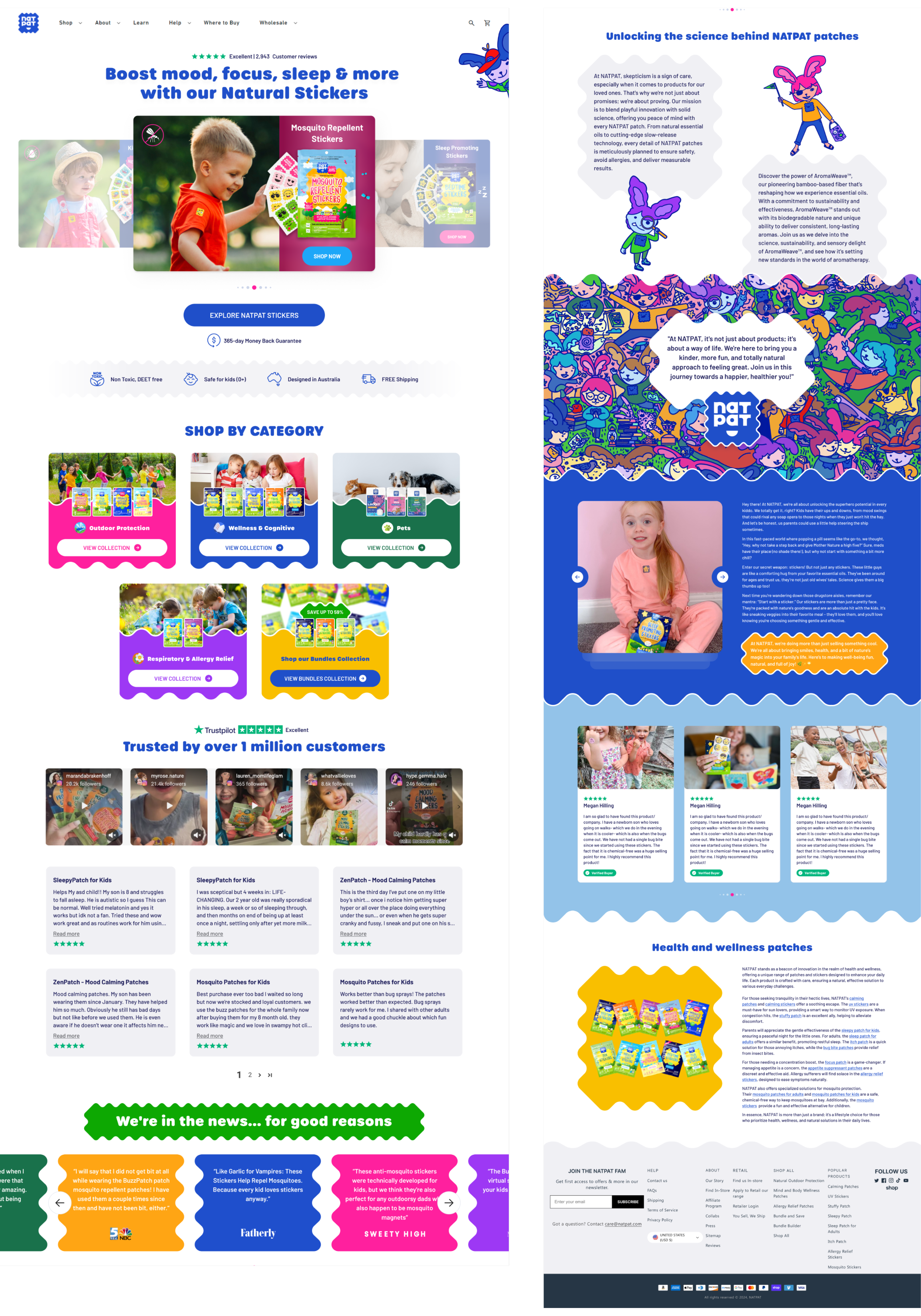
This project was completed as part of the Conversion Rate Store team, where my role focused on the UI/UX and product design side. NATPAT is a wellness brand for kids, and the redesign began with a clear hypothesis. If we rebuild the buying flow, redesign the homepage with clearer product bundles, playful character driven visuals and a stronger content structure, users will understand the products faster and feel more confident moving toward purchase. The first A/B test confirmed this direction. The new homepage delivered an uplift of eleven % in conversion from the homepage, proving that design, structure and product clarity directly influence buying intent. As the Product UI and UX designer, I was responsible for rethinking the entire experience from the ground up, including the card system, layout logic and overall visual direction.
Problem and the hypothesis behind the redesign

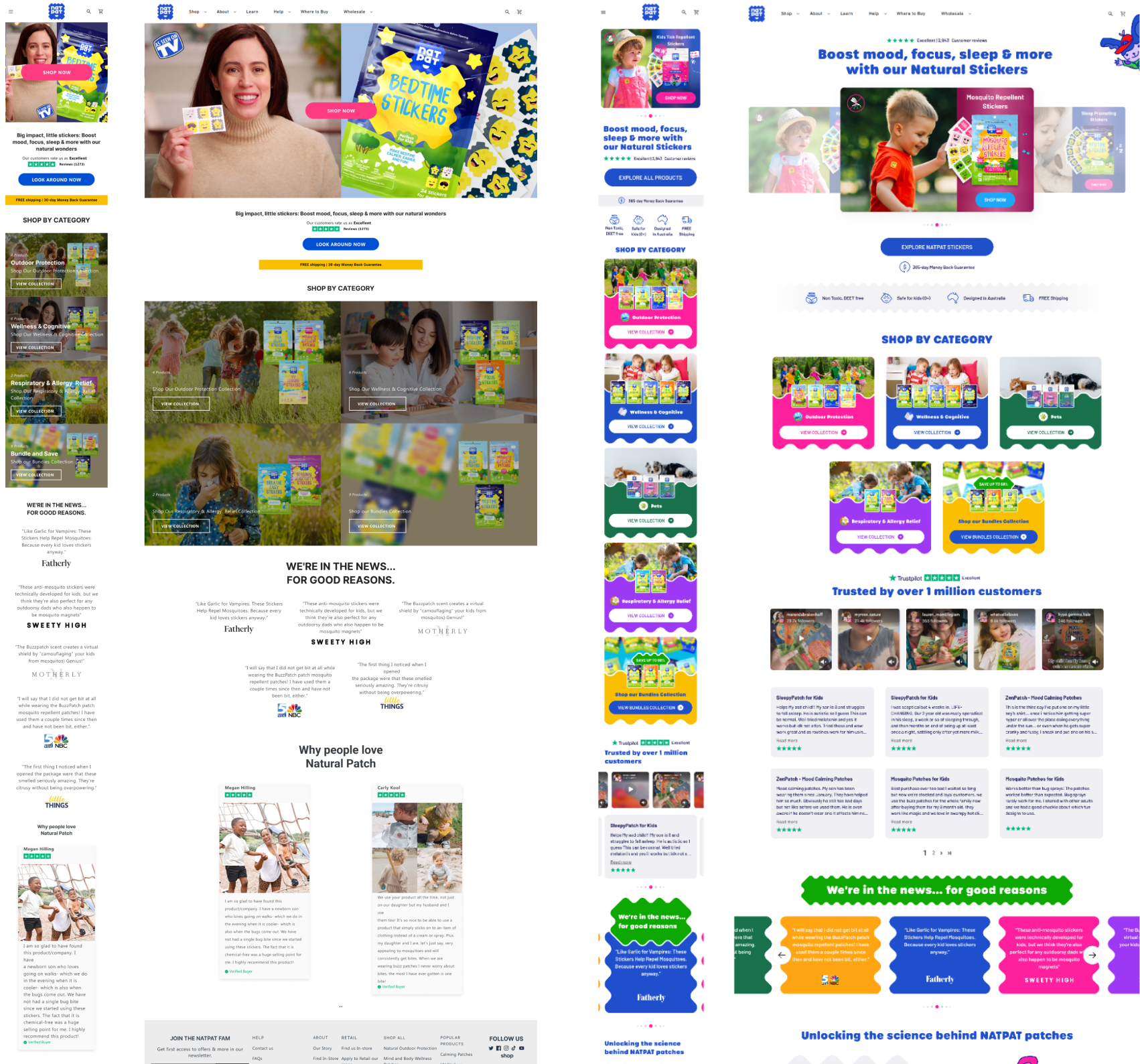
Through research and funnel analysis, we discovered that while engagement on the homepage was high, users did not consistently progress to Product Listing or PDP pages. The hypothesis for the redesign was simple. If we change the UI structure and refresh the layout to better communicate product types, benefits, bundles and visual characters, users will feel more motivated to continue to the next step. The assumption was that a clearer, more engaging homepage would increase the conversion rate from the homepage to the buying journey because users would understand the value of the patches earlier. My goal was to validate this through a new homepage structure, stronger content hierarchy and an emotionally richer design system.
UX challenges and the need for a new structure

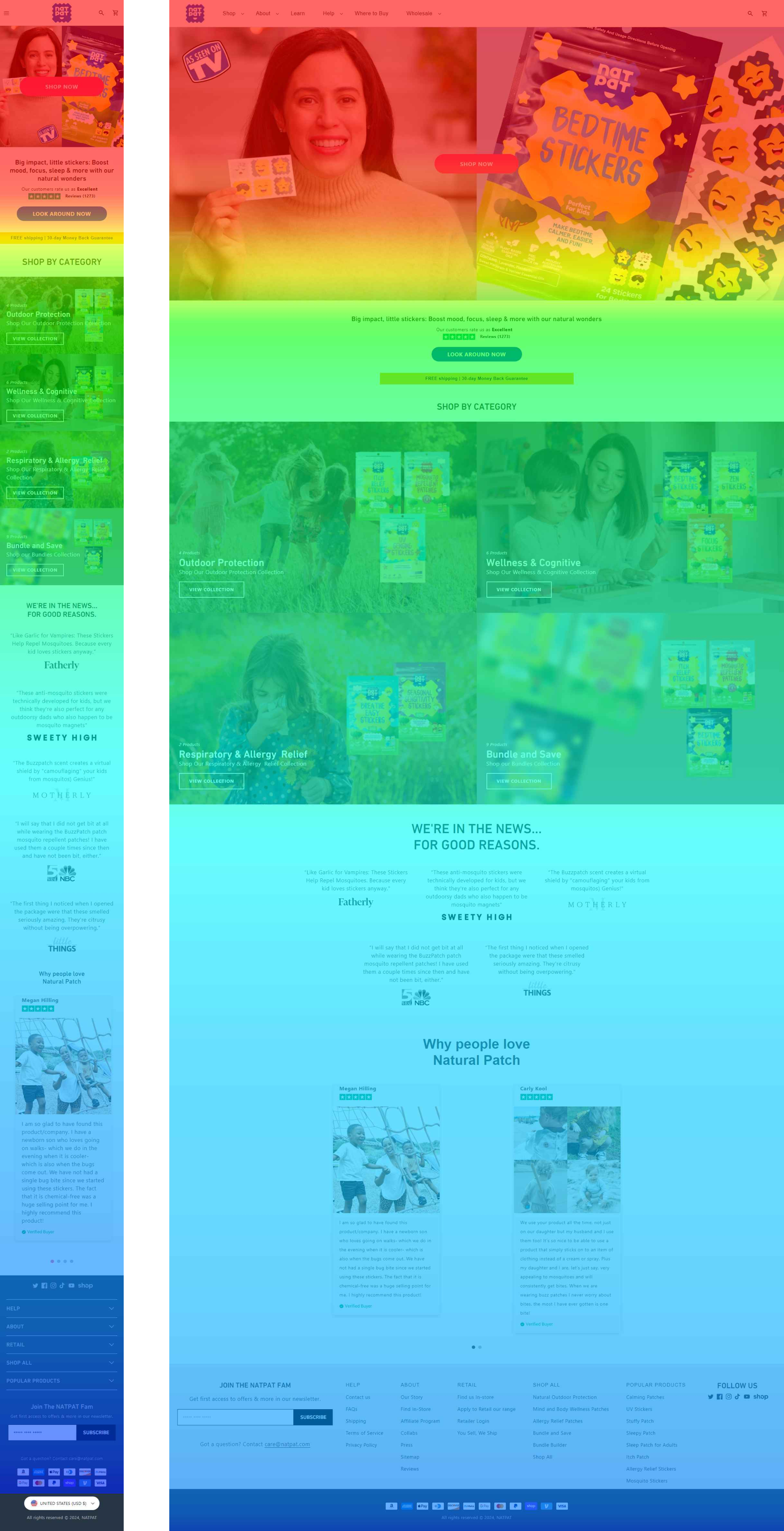
One of the biggest challenges was reorganising the buying logic. NATPAT sells a wide range of patches, and the old layout showed them in a way that felt cluttered and inconsistent. I had to design clear, repeatable card templates for individual products, multi packs, categories and bundles. Each needed to communicate the character of the product while staying functional on both desktop and mobile.
Visual direction and the introduction of illustrated styles

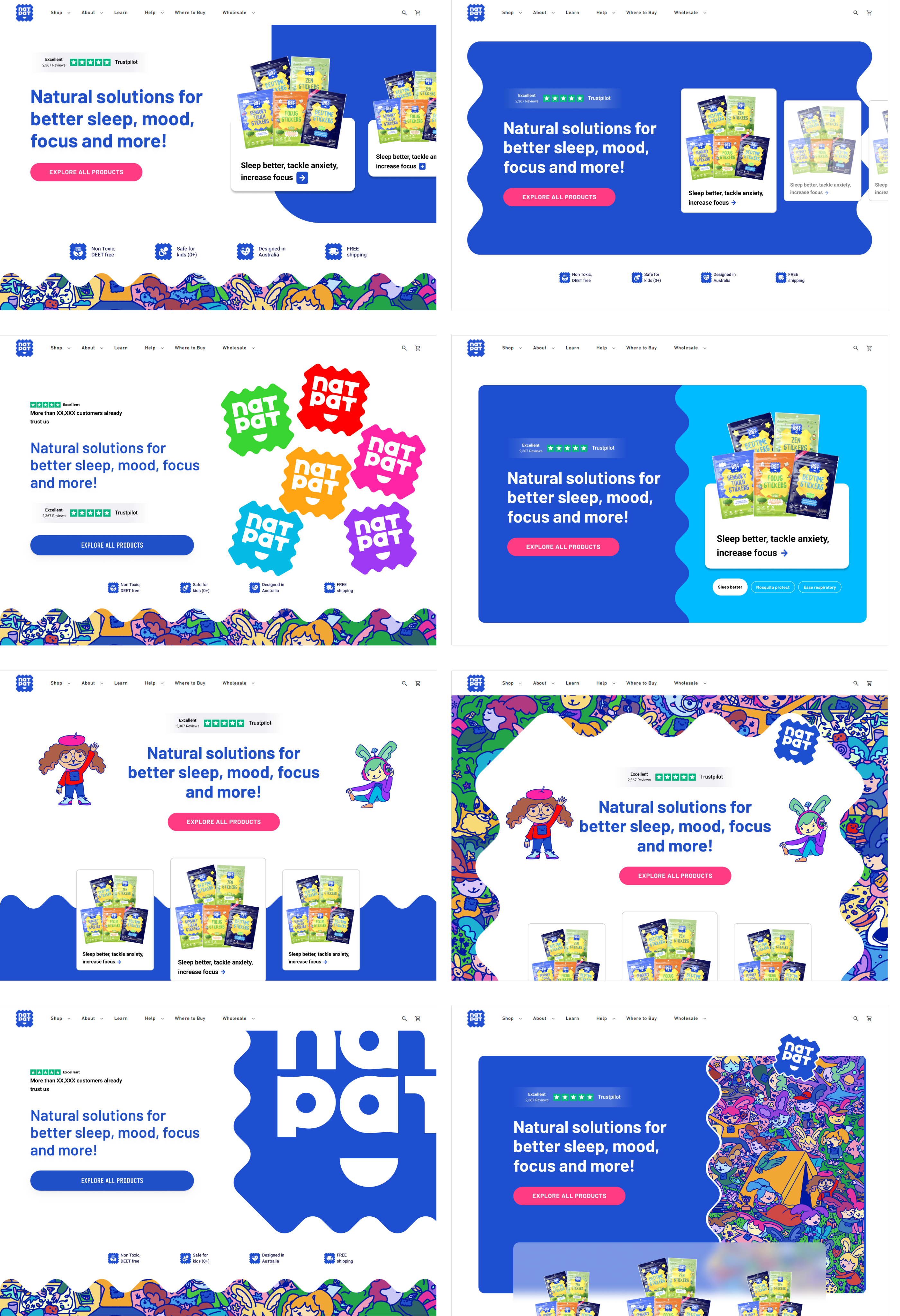
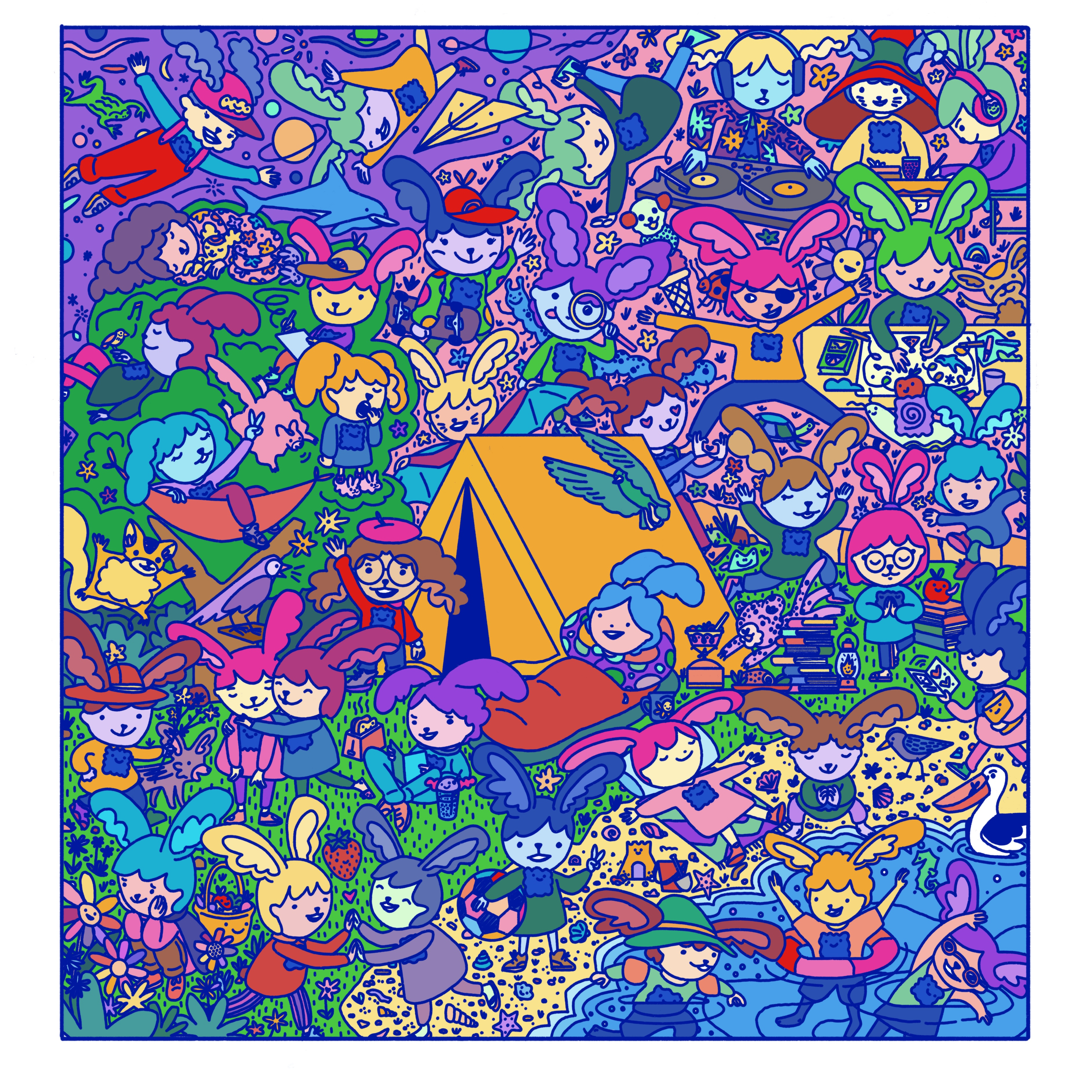
The client wanted to introduce a new illustrated style, including characters, textured backgrounds and playful frame shapes. I developed a system of soft edged, slightly irregular patch inspired frames that echoed the shape of the stickers themselves. These frames became a core UI element for cards, banners and category sections. I also connected different characters to different patch types so users could instantly associate each product with a personality or emotional theme. This approach helped create consistency while expanding the brand identity. The new illustrations, gradients and textures gave the homepage a warmer and more engaging tone, especially on mobile.
Designing for mobile first and creating a high impact hero

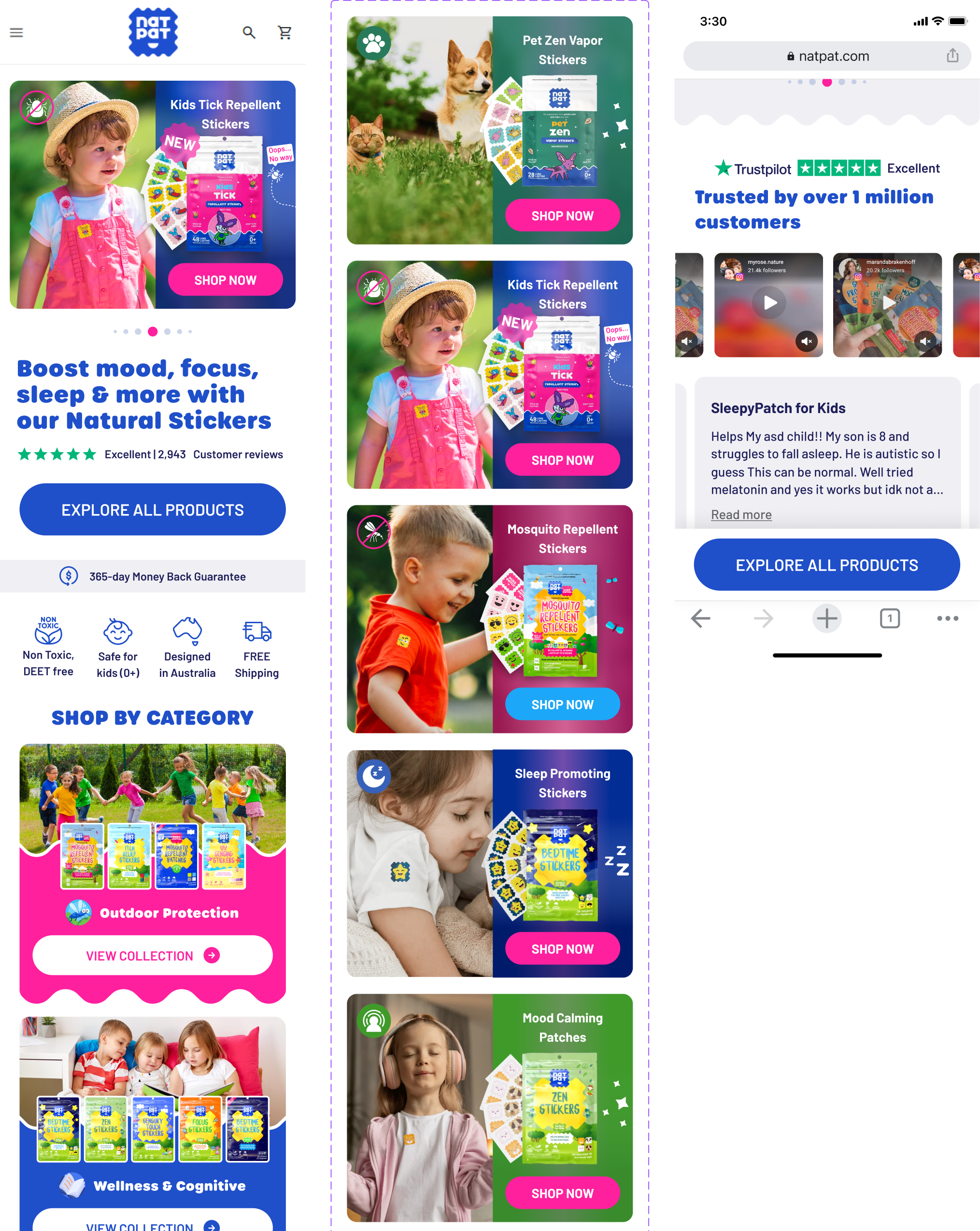
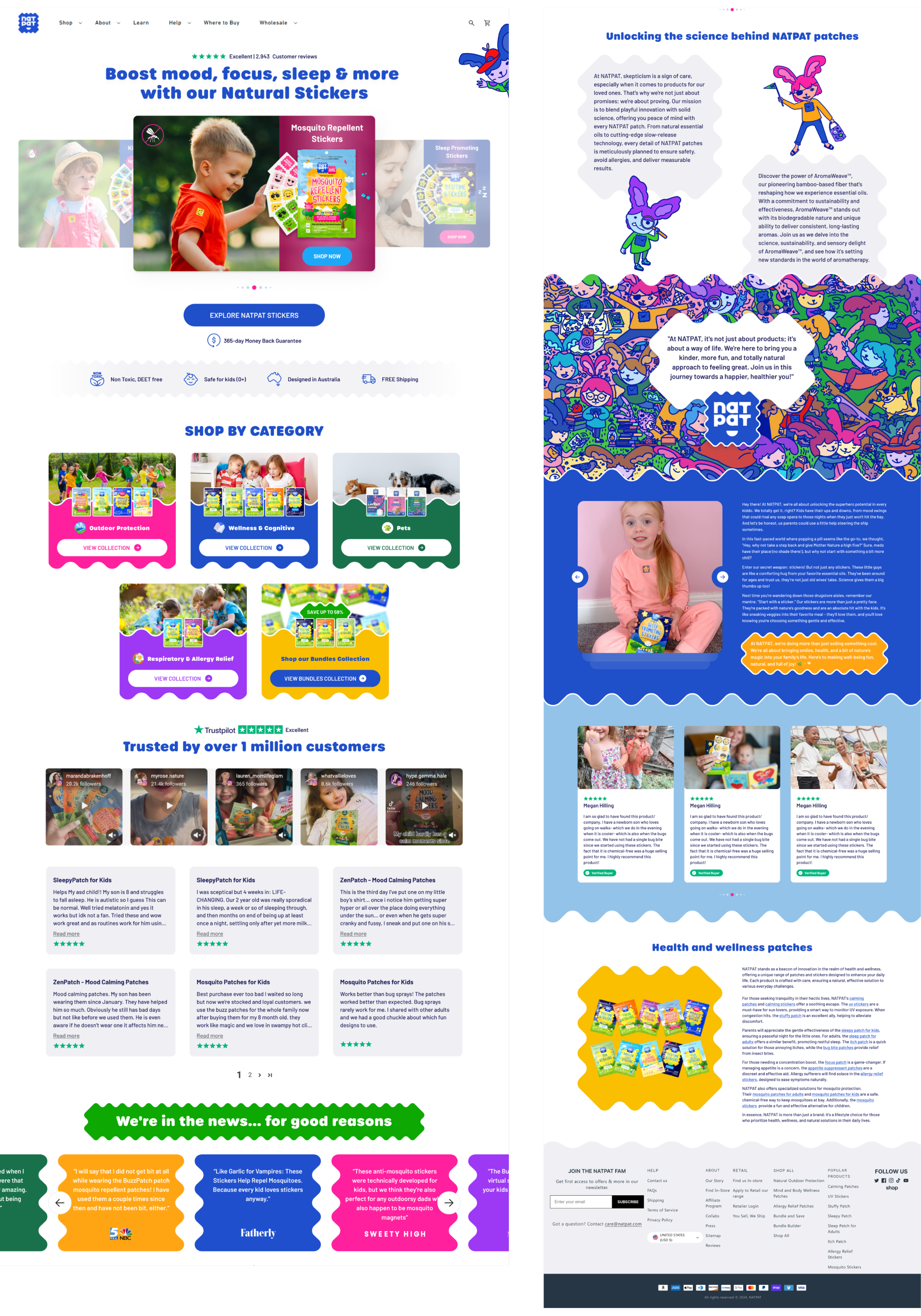
Since most NATPAT users browse on mobile, I built the design mobile first. The hero section was redesigned to be more persuasive with a clear CTA, product benefits, safety indicators and a dynamic carousel of key patches. I implemented a sticky CTA for mobile to keep the purchase action always visible without interrupting browsing. Additional information blocks, missing in the original design, were introduced to answer common user questions such as science behind the patches, real customer stories and news features. The new layout made it possible to scroll through everything in a natural, storytelling flow that built trust step by step.
Bringing the concept to life through UX flows and card systems

My role included designing the full card system for the homepage: product cards, bundle cards, pack sizes and category previews. I created multiple visual variations and tested how they behaved on small screens, ensuring they stayed readable and emotionally attractive. Reviews were expanded with more UGC, personalised highlights and a more human tone of voice. Galleries and lifestyle photos were integrated to show real children using the patches, reinforcing the emotional and practical value. Each part of the redesign positioned NATPAT as a friendly brand that understands parents’ concerns while staying visually fun for kids.
Results and insights from the A/B test

The A/B test showed that the redesigned homepage increased conversion by eleven %, and qualitative data explained why. Users spent more time engaging with the new product cards and character based bundles, the benefits were easier to understand, and the restructured layout made it clearer which patches to choose. Mobile users especially reacted well to the
Photo of a study hall area with desks and people studying.

Let’s Discuss your Project!

Schedule a Consult

8+

years of experience

100%

upwork job success rate

500+

projects delivered

+15%

average project boost

Kyrylo Buriak

© Copyright 2022, All Rights Reserved

Natpat

Context and starting point

This project was completed as part of the Conversion Rate Store team, where I worked as the Product (UI/UX) Designer. Before the redesign, we analysed both the page performance data and the results of user interviews. Around 20 % of interviewed users said they were unsure whether Mac cleaning tools could be trusted, and more than 30 % mentioned that they did not fully understand what CleanMyMac actually does after scanning the homepage.

The new homepage delivered an uplift of eleven % in conversion from the homepage, proving that design, structure and product clarity directly influence buying intent. As the Product UI and UX designer, I was responsible for rethinking the entire experience from the ground up, including the card system, layout logic and overall visual direction.

Problem and the hypothesis behind the redesign

Through research and funnel analysis, we discovered that while engagement on the homepage was high, users did not consistently progress to Product Listing or PDP pages. The hypothesis for the redesign was simple. If we change the UI structure and refresh the layout to better communicate product types, benefits, bundles and visual characters, users will feel more motivated to continue to the next step.

The assumption was that a clearer, more engaging homepage would increase the conversion rate from the homepage to the buying journey because users would understand the value of the patches earlier. My goal was to validate this through a new homepage structure, stronger content hierarchy and an emotionally richer design system.

UX challenges and the need for a new structure

One of the biggest challenges was reorganising the buying logic. NATPAT sells a wide range of patches, and the old layout showed them in a way that felt cluttered and inconsistent. I had to design clear, repeatable card templates for individual products, multi packs, categories and bundles. Each needed to communicate the character of the product while staying functional on both desktop and mobile.

Another challenge was fitting a large amount of important content into a single mobile viewport without overwhelming users. This required careful prioritisation and a strict hierarchy to keep the experience clean while still communicating benefits, safety, reviews and imagery.

Visual direction and the introduction of illustrated styles

The client wanted to introduce a new illustrated style, including characters, textured backgrounds and playful frame shapes. I developed a system of soft edged, slightly irregular patch inspired frames that echoed the shape of the stickers themselves. These frames became a core UI element for cards, banners and category sections.

I also connected different characters to different patch types so users could instantly associate each product with a personality or emotional theme. This approach helped create consistency while expanding the brand identity. The new illustrations, gradients and textures gave the homepage a warmer and more engaging tone, especially on mobile.

Designing for mobile first and creating a high impact hero

Since most NATPAT users browse on mobile, I built the design mobile first. The hero section was redesigned to be more persuasive with a clear CTA, product benefits, safety indicators and a dynamic carousel of key patches. I implemented a sticky CTA for mobile to keep the purchase action always visible without interrupting browsing.

Additional information blocks, missing in the original design, were introduced to answer common user questions such as science behind the patches, real customer stories and news features. The new layout made it possible to scroll through everything in a natural, storytelling flow that built trust step by step.

Bringing the concept to life through UX flows and card systems

My role included designing the full card system for the homepage: product cards, bundle cards, pack sizes and category previews. I created multiple visual variations and tested how they behaved on small screens, ensuring they stayed readable and emotionally attractive. Reviews were expanded with more UGC, personalised highlights and a more human tone of voice.

Galleries and lifestyle photos were integrated to show real children using the patches, reinforcing the emotional and practical value. Each part of the redesign positioned NATPAT as a friendly brand that understands parents’ concerns while staying visually fun for kids.

Results and insights from the A/B test

The A/B test showed that the redesigned homepage increased conversion by eleven %, and qualitative data explained why. Users spent more time engaging with the new product cards and character based bundles, the benefits were easier to understand, and the restructured layout made it clearer which patches to choose. Mobile users especially reacted well to the

cleaner hierarchy, sticky CTA and the improved storytelling flow. The redesign not only made the brand feel friendlier and more consistent but also strengthened the early stages of the buying journey. It became the foundation for future iterations focused on scaling conversion and testing deeper funnel improvements.

Photo of a study hall area with desks and people studying.

Let’s Discuss your Project!

Schedule a Consult

8+

years of experience

100%

upwork job success rate

+15%

average project boost

500+

projects delivered

© Copyright 2022, All Rights Reserved

Kyrylo Buriak

Natpat

Context and starting point

This project was completed as part of the Conversion Rate Store team, where my role focused on the UI/UX and product design side. NATPAT is a wellness brand for kids, and the redesign began with a clear hypothesis. If we rebuild the buying flow, redesign the homepage with clearer product bundles, playful character driven visuals and a stronger content structure, users will understand the products faster and feel more confident moving toward purchase. The first A/B test confirmed this direction.

The new homepage delivered an uplift of eleven % in conversion from the homepage, proving that design, structure and product clarity directly influence buying intent. As the Product UI and UX designer, I was responsible for rethinking the entire experience from the ground up, including the card system, layout logic and overall visual direction.

Problem and the hypothesis behind the redesign

Through research and funnel analysis, we discovered that while engagement on the homepage was high, users did not consistently progress to Product Listing or PDP pages. The hypothesis for the redesign was simple. If we change the UI structure and refresh the layout to better communicate product types, benefits, bundles and visual characters, users will feel more motivated to continue to the next step.

The assumption was that a clearer, more engaging homepage would increase the conversion rate from the homepage to the buying journey because users would understand the value of the patches earlier. My goal was to validate this through a new homepage structure, stronger content hierarchy and an emotionally richer design system.

UX challenges and the need for a new structure

One of the biggest challenges was reorganising the buying logic. NATPAT sells a wide range of patches, and the old layout showed them in a way that felt cluttered and inconsistent. I had to design clear, repeatable card templates for individual products, multi packs, categories and bundles. Each needed to communicate the character of the product while staying functional on both desktop and mobile.

Another challenge was fitting a large amount of important content into a single mobile viewport without overwhelming users. This required careful prioritisation and a strict hierarchy to keep the experience clean while still communicating benefits, safety, reviews and imagery.

Visual direction and the introduction of illustrated styles

The client wanted to introduce a new illustrated style, including characters, textured backgrounds and playful frame shapes. I developed a system of soft edged, slightly irregular patch inspired frames that echoed the shape of the stickers themselves. These frames became a core UI element for cards, banners and category sections.

I also connected different characters to different patch types so users could instantly associate each product with a personality or emotional theme. This approach helped create consistency while expanding the brand identity. The new illustrations, gradients and textures gave the homepage a warmer and more engaging tone, especially on mobile.

Designing for mobile first and creating a high impact hero

Since most NATPAT users browse on mobile, I built the design mobile first. The hero section was redesigned to be more persuasive with a clear CTA, product benefits, safety indicators and a dynamic carousel of key patches. I implemented a sticky CTA for mobile to keep the purchase action always visible without interrupting browsing.

Additional information blocks, missing in the original design, were introduced to answer common user questions such as science behind the patches, real customer stories and news features. The new layout made it possible to scroll through everything in a natural, storytelling flow that built trust step by step.

Bringing the concept to life through UX flows and card systems

My role included designing the full card system for the homepage: product cards, bundle cards, pack sizes and category previews. I created multiple visual variations and tested how they behaved on small screens, ensuring they stayed readable and emotionally attractive. Reviews were expanded with more UGC, personalised highlights and a more human tone of voice.

Galleries and lifestyle photos were integrated to show real children using the patches, reinforcing the emotional and practical value. Each part of the redesign positioned NATPAT as a friendly brand that understands parents’ concerns while staying visually fun for kids.

Results and insights from the A/B test

The A/B test showed that the redesigned homepage increased conversion by eleven %, and qualitative data explained why. Users spent more time engaging with the new product cards and character based bundles, the benefits were easier to understand, and the restructured layout made it clearer which patches to choose. Mobile users especially reacted well to the

cleaner hierarchy, sticky CTA and the improved storytelling flow. The redesign not only made the brand feel friendlier and more consistent but also strengthened the early stages of the buying journey. It became the foundation for future iterations focused on scaling conversion and testing deeper funnel improvements.

Photo of a study hall area with desks and people studying.

Let’s Discuss your Project!

Schedule a Consult

8+

years of experience

100%

upwork job success rate

+15%

average project boost

500+

projects delivered

© Copyright 2022, All Rights Reserved

Kyrylo Buriak

Natpat

Context and starting point

This project was completed as part of the Conversion Rate Store team, where my role focused on the UI/UX and product design side. NATPAT is a wellness brand for kids, and the redesign began with a clear hypothesis. If we rebuild the buying flow, redesign the homepage with clearer product bundles, playful character driven visuals and a stronger content structure, users will understand the products faster and feel more confident moving toward purchase. The first A/B test confirmed this direction.

The new homepage delivered an uplift of eleven % in conversion from the homepage, proving that design, structure and product clarity directly influence buying intent. As the Product UI and UX designer, I was responsible for rethinking the entire experience from the ground up, including the card system, layout logic and overall visual direction.

Problem and the hypothesis behind the redesign

Through research and funnel analysis, we discovered that while engagement on the homepage was high, users did not consistently progress to Product Listing or PDP pages. The hypothesis for the redesign was simple. If we change the UI structure and refresh the layout to better communicate product types, benefits, bundles and visual characters, users will feel more motivated to continue to the next step.

The assumption was that a clearer, more engaging homepage would increase the conversion rate from the homepage to the buying journey because users would understand the value of the patches earlier. My goal was to validate this through a new homepage structure, stronger content hierarchy and an emotionally richer design system.

UX challenges and the need for a new structure

One of the biggest challenges was reorganising the buying logic. NATPAT sells a wide range of patches, and the old layout showed them in a way that felt cluttered and inconsistent. I had to design clear, repeatable card templates for individual products, multi packs, categories and bundles. Each needed to communicate the character of the product while staying functional on both desktop and mobile.

Another challenge was fitting a large amount of important content into a single mobile viewport without overwhelming users. This required careful prioritisation and a strict hierarchy to keep the experience clean while still communicating benefits, safety, reviews and imagery.

Visual direction and the introduction of illustrated styles

The client wanted to introduce a new illustrated style, including characters, textured backgrounds and playful frame shapes. I developed a system of soft edged, slightly irregular patch inspired frames that echoed the shape of the stickers themselves. These frames became a core UI element for cards, banners and category sections.

I also connected different characters to different patch types so users could instantly associate each product with a personality or emotional theme. This approach helped create consistency while expanding the brand identity. The new illustrations, gradients and textures gave the homepage a warmer and more engaging tone, especially on mobile.

Designing for mobile first and creating a high impact hero

Since most NATPAT users browse on mobile, I built the design mobile first. The hero section was redesigned to be more persuasive with a clear CTA, product benefits, safety indicators and a dynamic carousel of key patches. I implemented a sticky CTA for mobile to keep the purchase action always visible without interrupting browsing.

Additional information blocks, missing in the original design, were introduced to answer common user questions such as science behind the patches, real customer stories and news features. The new layout made it possible to scroll through everything in a natural, storytelling flow that built trust step by step.

Bringing the concept to life through UX flows and card systems

My role included designing the full card system for the homepage: product cards, bundle cards, pack sizes and category previews. I created multiple visual variations and tested how they behaved on small screens, ensuring they stayed readable and emotionally attractive. Reviews were expanded with more UGC, personalised highlights and a more human tone of voice.

Galleries and lifestyle photos were integrated to show real children using the patches, reinforcing the emotional and practical value. Each part of the redesign positioned NATPAT as a friendly brand that understands parents’ concerns while staying visually fun for kids.

Results and insights from the A/B test

The A/B test showed that the redesigned homepage increased conversion by eleven %, and qualitative data explained why. Users spent more time engaging with the new product cards and character based bundles, the benefits were easier to understand, and the restructured layout made it clearer which patches to choose. Mobile users especially reacted well to the

cleaner hierarchy, sticky CTA and the improved storytelling flow. The redesign not only made the brand feel friendlier and more consistent but also strengthened the early stages of the buying journey. It became the foundation for future iterations focused on scaling conversion and testing deeper funnel improvements.

Photo of a study hall area with desks and people studying.

Let’s Discuss your Project!

Schedule a Consult

8+

years of experience

100%

upwork job success rate

+15%

average project boost

500+

projects delivered

© Copyright 2022, All Rights Reserved

Kyrylo Buriak

Natpat

Context and starting point

This project was completed as part of the Conversion Rate Store team, where my role focused on the UI/UX and product design side. NATPAT is a wellness brand for kids, and the redesign began with a clear hypothesis. If we rebuild the buying flow, redesign the homepage with clearer product bundles, playful character driven visuals and a stronger content structure, users will understand the products faster and feel more confident moving toward purchase. The first A/B test confirmed this direction.

The new homepage delivered an uplift of eleven % in conversion from the homepage, proving that design, structure and product clarity directly influence buying intent. As the Product UI and UX designer, I was responsible for rethinking the entire experience from the ground up, including the card system, layout logic and overall visual direction.

Problem and the hypothesis behind the redesign

Through research and funnel analysis, we discovered that while engagement on the homepage was high, users did not consistently progress to Product Listing or PDP pages. The hypothesis for the redesign was simple. If we change the UI structure and refresh the layout to better communicate product types, benefits, bundles and visual characters, users will feel more motivated to continue to the next step.

The assumption was that a clearer, more engaging homepage would increase the conversion rate from the homepage to the buying journey because users would understand the value of the patches earlier. My goal was to validate this through a new homepage structure, stronger content hierarchy and an emotionally richer design system.

UX challenges and the need for a new structure

One of the biggest challenges was reorganising the buying logic. NATPAT sells a wide range of patches, and the old layout showed them in a way that felt cluttered and inconsistent. I had to design clear, repeatable card templates for individual products, multi packs, categories and bundles. Each needed to communicate the character of the product while staying functional on both desktop and mobile.

Another challenge was fitting a large amount of important content into a single mobile viewport without overwhelming users. This required careful prioritisation and a strict hierarchy to keep the experience clean while still communicating benefits, safety, reviews and imagery.

Visual direction and the introduction of illustrated styles

The client wanted to introduce a new illustrated style, including characters, textured backgrounds and playful frame shapes. I developed a system of soft edged, slightly irregular patch inspired frames that echoed the shape of the stickers themselves. These frames became a core UI element for cards, banners and category sections.

I also connected different characters to different patch types so users could instantly associate each product with a personality or emotional theme. This approach helped create consistency while expanding the brand identity. The new illustrations, gradients and textures gave the homepage a warmer and more engaging tone, especially on mobile.

Designing for mobile first and creating a high impact hero

Since most NATPAT users browse on mobile, I built the design mobile first. The hero section was redesigned to be more persuasive with a clear CTA, product benefits, safety indicators and a dynamic carousel of key patches. I implemented a sticky CTA for mobile to keep the purchase action always visible without interrupting browsing.

Additional information blocks, missing in the original design, were introduced to answer common user questions such as science behind the patches, real customer stories and news features. The new layout made it possible to scroll through everything in a natural, storytelling flow that built trust step by step.

Bringing the concept to life through UX flows and card systems

My role included designing the full card system for the homepage: product cards, bundle cards, pack sizes and category previews. I created multiple visual variations and tested how they behaved on small screens, ensuring they stayed readable and emotionally attractive. Reviews were expanded with more UGC, personalised highlights and a more human tone of voice.

Galleries and lifestyle photos were integrated to show real children using the patches, reinforcing the emotional and practical value. Each part of the redesign positioned NATPAT as a friendly brand that understands parents’ concerns while staying visually fun for kids.

Results and insights from the A/B test

The A/B test showed that the redesigned homepage increased conversion by eleven %, and qualitative data explained why. Users spent more time engaging with the new product cards and character based bundles, the benefits were easier to understand, and the restructured layout made it clearer which patches to choose. Mobile users especially reacted well to the
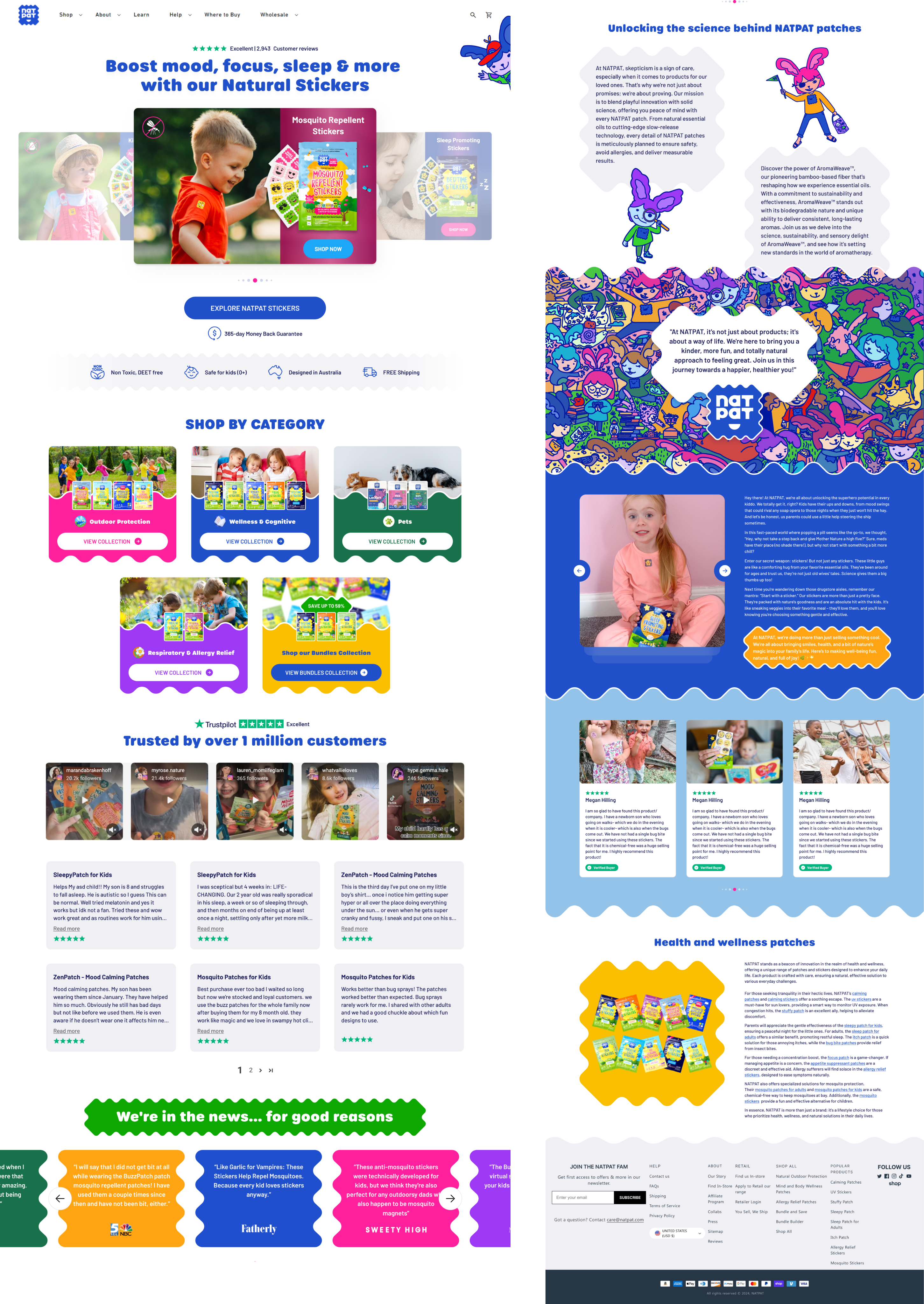
cleaner hierarchy, sticky CTA and the improved storytelling flow. The redesign not only made the brand feel friendlier and more consistent but also strengthened the early stages of the buying journey. It became the foundation for future iterations focused on scaling conversion and testing deeper funnel improvements.

Photo of a study hall area with desks and people studying.

Let’s Discuss your Project!

Schedule a Consult

8+

years of experience

100%

upwork job success rate

+15%

average project boost

500+

projects delivered

© Copyright 2022, All Rights Reserved

Kyrylo Buriak